
What is CRC?
The Coastal Resources Center in the Graduate School of Oceanography at the University of Rhode Island focuses on using science to address societal issues. Learn more about us on the About, Our Work, People and Projects pages.
Why is CRC Important?
Around the world, the Coastal Resources Center (CRC) works with communities and citizens to become more effective stewards of their shores and seas. Partnering with scholars and stakeholders, CRC applies science and empowers communities through collaboration and capacity building.
How do we make a difference?
CountlessLives Changed
>20Active Projects
>$10 Millionin 2022 Grant Dollars
Recent News
- Hiring: Coordinator at the Coastal Resources Center - The University of Rhode Island, Coastal Resources Center is seeking a Coordinator to assist in performing routine and complex fiscal and administrative functions to support the Center’s programming portfolio. The coordinator will be responsible for developing proposals, assisting with the Principal Investigator’s (PI’s) guidance of overall project management, and performing post-award administrative, financial management, and accounting […]
 Micronesia Project Coordinator (Re-Advertised) - We are seeking a dynamic and results-oriented individual to join our team and the Nationals of Micronesia, including the Federated States of Micronesia, the Republic of Palau, and the Republic of the Marshall Islands, are encouraged to apply. Candidates who have previously applied need not reapply. PROJECT OVERVIEW The U.S. Agency for International Development (USAID) […]
- Now Hiring: USAID Melanesia Project Coordinator - Project Overview The U.S. Agency for International Development (USAID) OurFish OurFuture Project is a cooperative agreement awarded by USAID that seeks to address the drivers of illegal, unreported, and unregulated (IUU) fishing that are degrading coastal fisheries and biodiversity and negatively impacting local livelihoods, food stability, and maritime security in the Pacific Islands region. The […]
 Position Available – Coordinator, Coastal Resources Center - The University of Rhode Island, Coastal Resources Center is seeking a Coordinator to assist in performing routine and complex fiscal and administrative functions to support the Center’s programming portfolio. The coordinator will be responsible for developing proposals, assisting with the Principal Investigator’s (PI’s) guidance of overall project management, and performing post-award administrative, financial management, and accounting […]
 Position Available – Monitoring, Evaluation, and Learning (MERL) Specialist - The University of Rhode Island, Coastal Resources Center and Blue Ventures seek a MERL Specialist for a five-year USAID-funded Marine Conservation, Sustainable Development and Governance project in Madagascar. The MERL Specialist will be responsible for the design, coordination, and implementation of the MERL framework for the project. The position will be based in the Project office […]
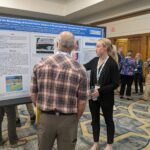 Sharing Our Coastal Science Work - Recently some of our CRC members as well as URI faculty and students attended the 10th Coastal Sediments conference, an international coastal science and engineering conference held this year in New Orleans. This year’s theme was “Inclusive coastal science and engineering for resilient communities” and researchers from CRC, URI and Penn State presented results from […]